 Dallas Hearth & Chimney SweepDallas Hearth & Chimney Sweep
Clean flues, safer Dallas homes.
A Dallas chimney sweep is the trade that cleans creosote and soot from your flue, inspects the structure for cracks and blockages, and makes the system safe to burn — and if you've been searching chimney sweep near me, that's exactly the work we do across Dallas County. Most homeowners call us because they smell smoke pushing back into the room, see black flakes on the hearth, or just want the once-a-year check before the first cold front. We sweep it clean, show you what we find, and tell you straight what needs fixing now versus what can wait — no upsell, no scare tactics, just the condition of the chimney as it actually is.
Call (267) 347-8864
Tell us about your chimney sweep job — we'll get you a fast quote.
A firm, all-in price confirmed before we start — no surprises.
On time, done to standard, and tidy when we leave.
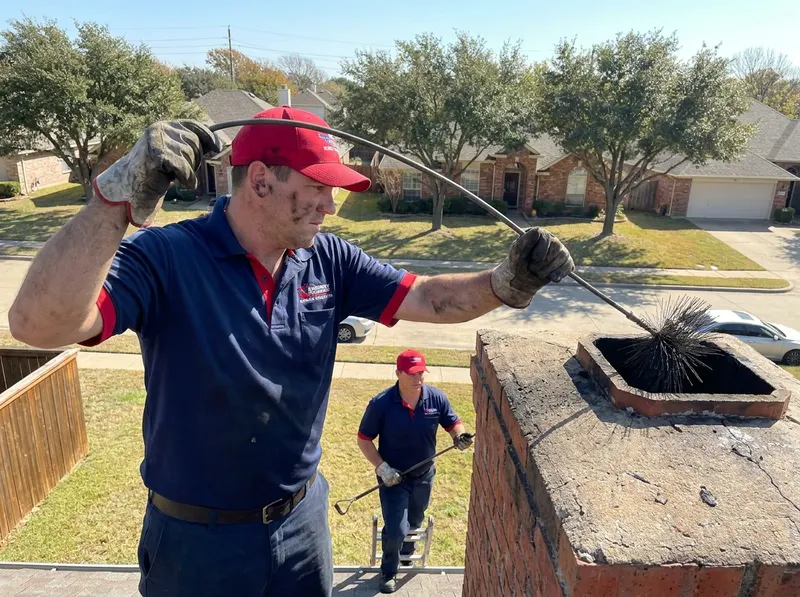
We remove creosote, soot and debris from the flue and firebox and sweep the hearth clean before we leave — drop cloths down, dust contained, no black footprints through the house. Creosote buildup is the leading cause of chimney fires, which is why an annual sweep matters most for homes that burn regularly through a Dallas winter. We work the flue from both the firebox and the roof where access allows, clearing the smoke shelf and damper area where buildup hides, and we show you the before-and-after so you're not taking our word for it. If the flue's only lightly used, we'll tell you that too rather than invent work that isn't needed.
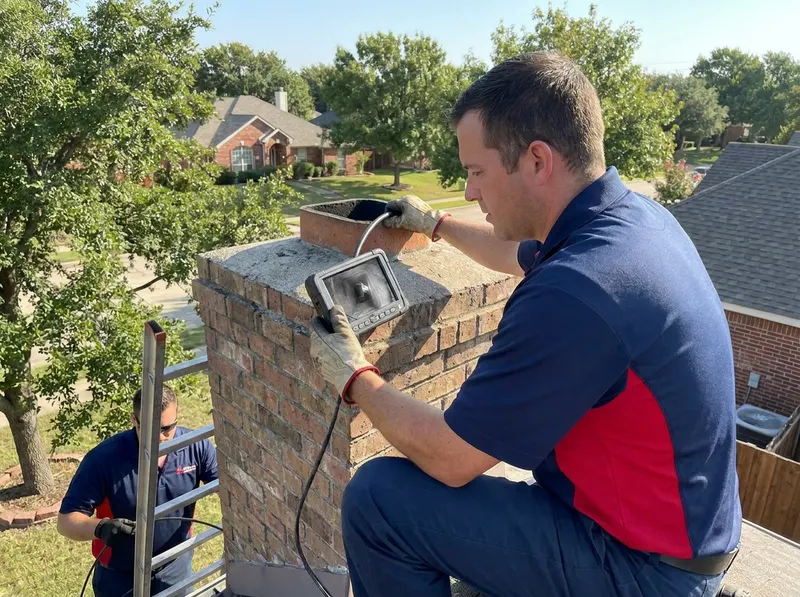
A Level 1 inspection covers the readily accessible parts of the chimney and flue and suits a system you use every year with no known problems; a Level 2 adds a camera scan of the interior and is the right call for a home sale, an insurance request, or any system whose history you don't know. We inspect for cracked liners, gaps in the masonry, deteriorated mortar joints, and blockages from nests or leaves — common after a windy stretch off the Trinity River Greenbelt. You get a clear read on what's safe to burn, what should be watched, and what needs repair before the next fire, so there are no surprises mid-winter.
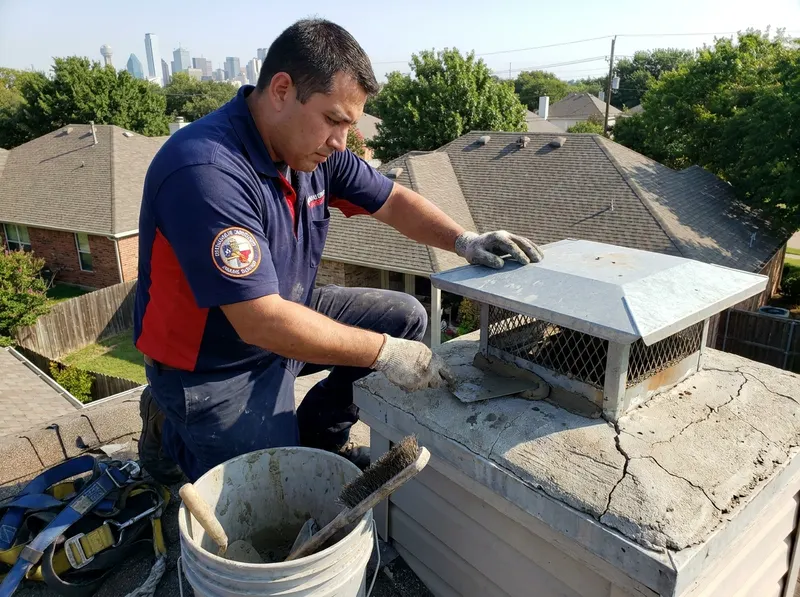
The cap keeps rain, animals and embers out of the flue; the crown is the concrete slab that sheds water off the top of the chimney. Both take a beating from North Texas sun and storms, and a cracked crown lets water into the masonry where it freezes and splits brick from the inside out. We replace missing or rusted-out caps, fit screened caps that keep birds and squirrels out of the flue, and reseal or rebuild crowns so the water stays outside where it belongs. Catching a hairline crown crack early is the difference between a reseal and a full rebuild later.
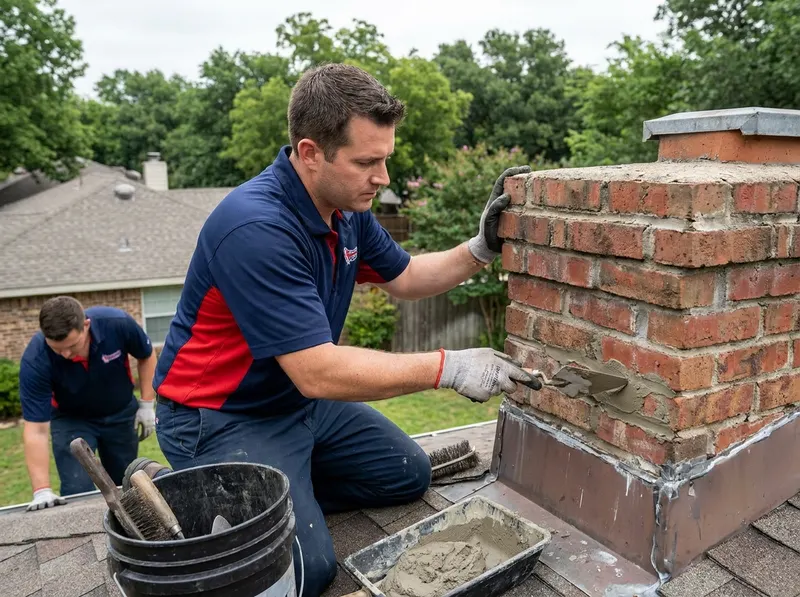
Spalling brick, crumbling mortar joints, and failed roof flashing are the usual sources of the water stain on a Dallas ceiling. We repoint joints to match the existing mortar, replace damaged brick, and reseal or replace the flashing where the chimney meets the roofline — that flashing joint is the single most common leak point on a brick chimney. This work matters most on older homes in Kessler Park and Oak Cliff where original masonry has weathered decades of freeze-thaw, and on the bungalows near Bishop Arts where the chimneys are as old as the houses.
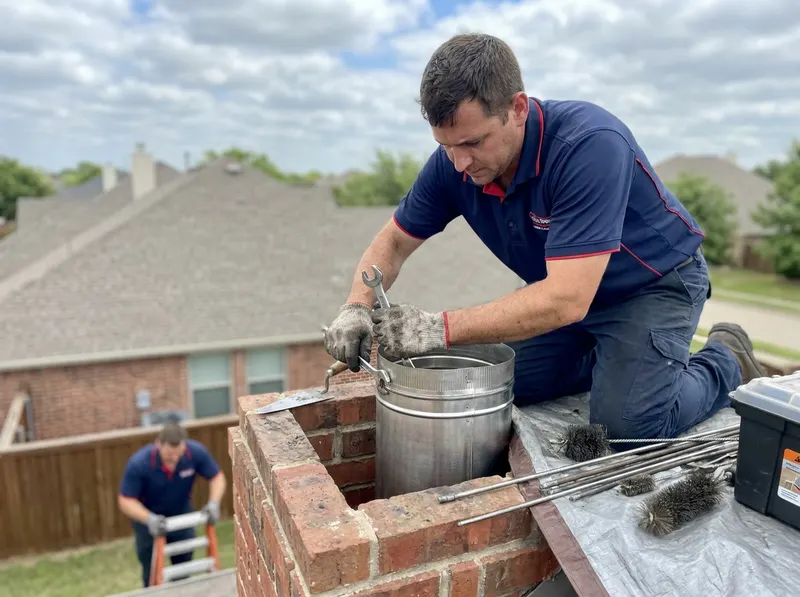
If you've got an active leak, a blockage you hit mid-season, or smoke backing into the room, call and we'll get out to diagnose it. We can't fix what we can't see, so the first step is always a scope of the problem — then we tell you what's safe to use and what needs to come offline until it's repaired. An active leak during a wet stretch can wreck drywall and framing fast, so getting eyes on it quickly is usually the cheapest move even if the repair itself waits a few days for materials.
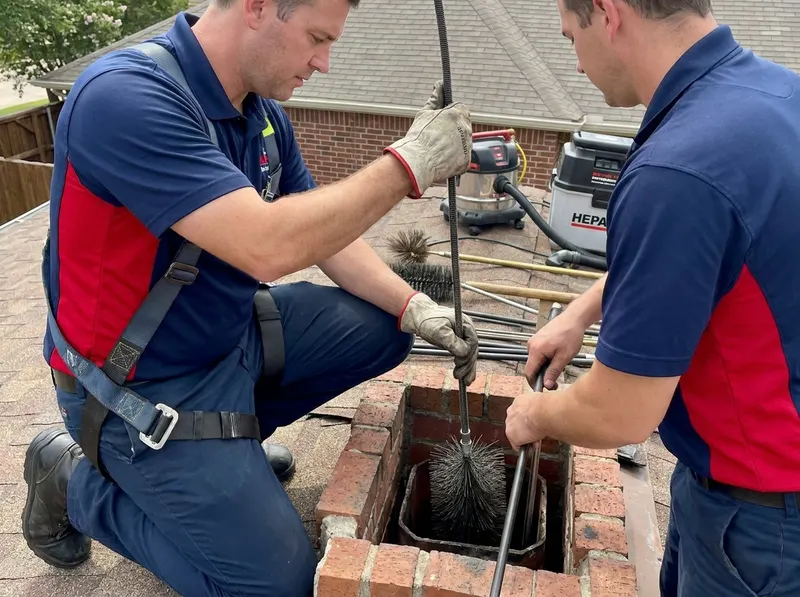
A yearly sweep-and-check keeps a working fireplace safe and catches small problems before they become the kind that stain a ceiling or crack a flue. Scheduling it in late summer or early fall means the system is ready before the first real cold front — and you're not on a December waitlist behind everyone who waited until the first freeze to think about it. For homes that burn often, this annual visit is the single best money you can spend on the fireplace.
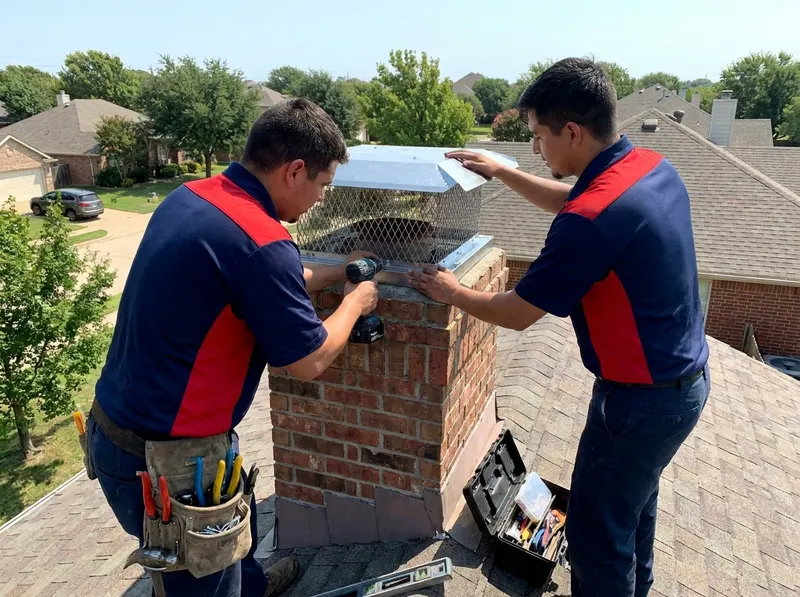
A missing or damaged cap is an open invitation for rain, leaves, and nesting birds and squirrels — and a flue packed with a nest is both a draft problem and a fire hazard. We supply and fit stainless or galvanized caps sized to your flue, with screening that keeps animals out while letting smoke draft freely. If you've heard scratching in the chimney or found debris in the firebox, the cap is usually where the problem starts.
Start with what's actually wrong, because the right service depends entirely on which problem you have. If you burn a few times each winter and just want the system clean and checked, choose a standard sweep with a Level 1 inspection — it clears the creosote and confirms the flue is safe, and it's the most affordable option at the $150–$325 range. If you just bought a home in Lakewood or Casa Linda, or you're putting a place on the market, choose a Level 2 inspection instead; it adds a camera scan of the flue interior and the concealed areas a visual pass can't reach, which matters when you don't know the chimney's history — the trade-off is a higher fee for documentation you can hand a buyer or insurer. If you smell smoke in the room or the draft feels weak, that's not a cleaning problem first; choose a diagnostic visit so we find the blockage, the cracked liner, or the negative-pressure issue before you spend on a sweep that won't fix it — the trade-off here is paying for a scope visit upfront, but it saves you from buying the wrong service twice. For visible damage — a leaning cap, water stains on the ceiling, spalling brick after a wind storm — choose repair, not maintenance, and let us scope it on-site, because a sweep does nothing for a failing crown. There's also a timing decision: if your goal is to be ready for winter, book the sweep and inspection in late summer; if your goal is to fix water damage from the season just past, spring is the better window because the masonry has dried out and storm season has settled. The rule of thumb: cleaning keeps a healthy chimney healthy, inspection tells you which category you're in, and repair fixes the thing that's already failing. When you're unsure, the inspection is the cheap insurance — it's far less than guessing wrong, and far less than a chimney fire or a rebuilt firebox.
| On-site minimum (any single visit) | from $150 |
| Standard sweep + Level 1 inspection | $150–$325 |
| Level 2 camera inspection | $225–$450 |
| Chimney cap supply & install | $200–$500 |
| Crown reseal / repair | $250–$700 |
| Crown rebuild (full slab) | $600–$1,500 |
| Masonry repointing (per area) | $300–$1,200 |
| Brick replacement / spalling repair | $350–$1,400 |
| Flashing reseal / repair | $200–$650 |
| Flue liner inspection scan | $150–$300 |
| Animal nest / blockage removal | $150–$400 |
| Emergency diagnostic visit | from $150 |
Your exact price is confirmed before any work begins.
Dallas chimneys live a harder life than the mild winters suggest — it's the swing that gets them. A 75-degree afternoon can drop into a hard freeze overnight when a cold front rolls through, and that freeze-thaw cycle is brutal on crowns and mortar, especially on the older brick homes around Kessler Park, the M Streets and the bungalows near the Bishop Arts District where the masonry has already weathered decades of it. Add the wind that whips across White Rock Lake and the Trinity River Greenbelt, which loads flues with leaves and the occasional nest, and you get the two problems we see most here: water working into cracked masonry, and blockages that weaken the draft. The bigger, newer homes in Preston Hollow and Greenway Parks tend to have taller, more complex chimneys with multiple flues, which means roof access and inspection take longer; the older Oak Cliff and Wynnewood houses are more about aging mortar and crowns that have never been resealed. North Texas storm season piles on too — a single round of high wind or hail can lift flashing or crack a crown, which is why we push inspections in late summer before burning season and repairs in spring after the wind has done its damage. Catching a crack in September is far cheaper than discovering it in January when the chimney's in daily use and every sweep in the county is booked solid.
Neighborhoods we cover: Lakewood, Lake Highlands, Oak Cliff, Preston Hollow, Kessler Park, M Streets, Bishop Arts District, Casa Linda, Greenway Parks, Wynnewood.
A standard sweep with a Level 1 inspection typically runs $150–$325 in Dallas, with $150 being our on-site minimum for any visit. The price depends on how much creosote has built up, the condition of the flue, and roof access. Every number is a ballpark until we're on the roof — the exact price is confirmed during a free on-site estimate.
Once a year for any chimney you burn in regularly, ideally before the burning season starts. Even Dallas homes that only light a few fires a winter should get an annual inspection, because creosote and blockages build up faster than people expect and a quick check is far cheaper than a chimney fire or a water-stained ceiling.
Yes. If you have an active leak, smoke pushing back into the room, or a blockage you hit mid-season, call (267) 347-8864 and we'll get out to diagnose it. The first step is always scoping the problem so we know whether the system is safe to keep using or needs to come offline until it's repaired.
A Level 1 inspection covers the readily accessible parts of the chimney and flue and suits a system you use every year with no known issues. A Level 2 adds a camera scan of the flue interior and is the right call for a home purchase, an insurance request, or any Dallas chimney whose history you don't know. The Level 2 costs more but gives you documentation you can hand a buyer or insurer.
We cover Dallas and the surrounding county — Lakewood, Lake Highlands, Oak Cliff, Preston Hollow, Kessler Park, the M Streets, Bishop Arts District, Casa Linda, Greenway Parks and Wynnewood among them. If you're near White Rock Lake, Klyde Warren Park or the Dallas Arboretum, you're in our range. Call or text a photo of your chimney to (267) 347-8864 for a free estimate.
On a Dallas home the leak almost always starts at one of three places: the flashing where the chimney meets the roof, a cracked crown at the top, or spalling brick and failed mortar joints letting water soak in. The freeze-thaw swings and storm-season wind we get here are hard on all three. We scope it on-site to find the actual source rather than guessing, because chasing the wrong leak point wastes your money.
Yes. If you've heard scratching in the flue, found nesting debris in the firebox, or your cap is rusted or missing, we supply and fit a properly sized cap with screening that keeps birds and squirrels out while letting smoke draft freely. It's one of the cheapest preventive jobs we do and it solves both the animal problem and a common draft problem at once.
Late summer through early fall — roughly September and October — is the ideal window in Dallas. The chimney gets cleaned and inspected before the first cold front, you avoid the December rush when every sweep in the county is booked, and any repair we find has time to get done before burning season. Spring is the better time for cap, crown, and storm-damage repair after a winter of use and North Texas wind.
It's strongly recommended. A Level 2 camera inspection scans the flue interior and concealed areas a standard walkthrough can't reach, which matters most on a Dallas home whose chimney history you don't know. It can flag a cracked liner, hidden water damage, or an unsafe firebox before you close — far cheaper to know going in than to discover after you own it.
Creosote is the flammable residue that wood smoke leaves on the flue walls, and it's the leading cause of chimney fires. The more you burn — and the cooler or smokier the fires — the faster it accumulates. An annual sweep removes it before it reaches a dangerous level, which is why we recommend one for any Dallas fireplace that's used regularly through the winter.
Yes. On older homes in areas like Kessler Park, Oak Cliff and Wynnewood, decades of freeze-thaw cause brick faces to flake and mortar joints to crumble. We repoint the joints to match the existing mortar and replace damaged brick so water stays out and the structure stays sound. We'll scope the extent on-site and give you an honest range before any work starts.